By Bart Treece, Director, Mobility Innovation Center
Ten years ago, someone took a risk. A few someones, actually. And because of that, the Mobility Innovation Center exists, and so does the community of partners, researchers, and innovators that has grown around it. At a news conference in March 2016, the MIC was officially launched as a public-private partnership between Challenge Seattle and the University of Washington. The concept is simple: bring the best of the public sector, private industry, and non-profits to work with the brightest minds in academia to address current and emerging transportation challenges through partner-driven applied research and innovation.
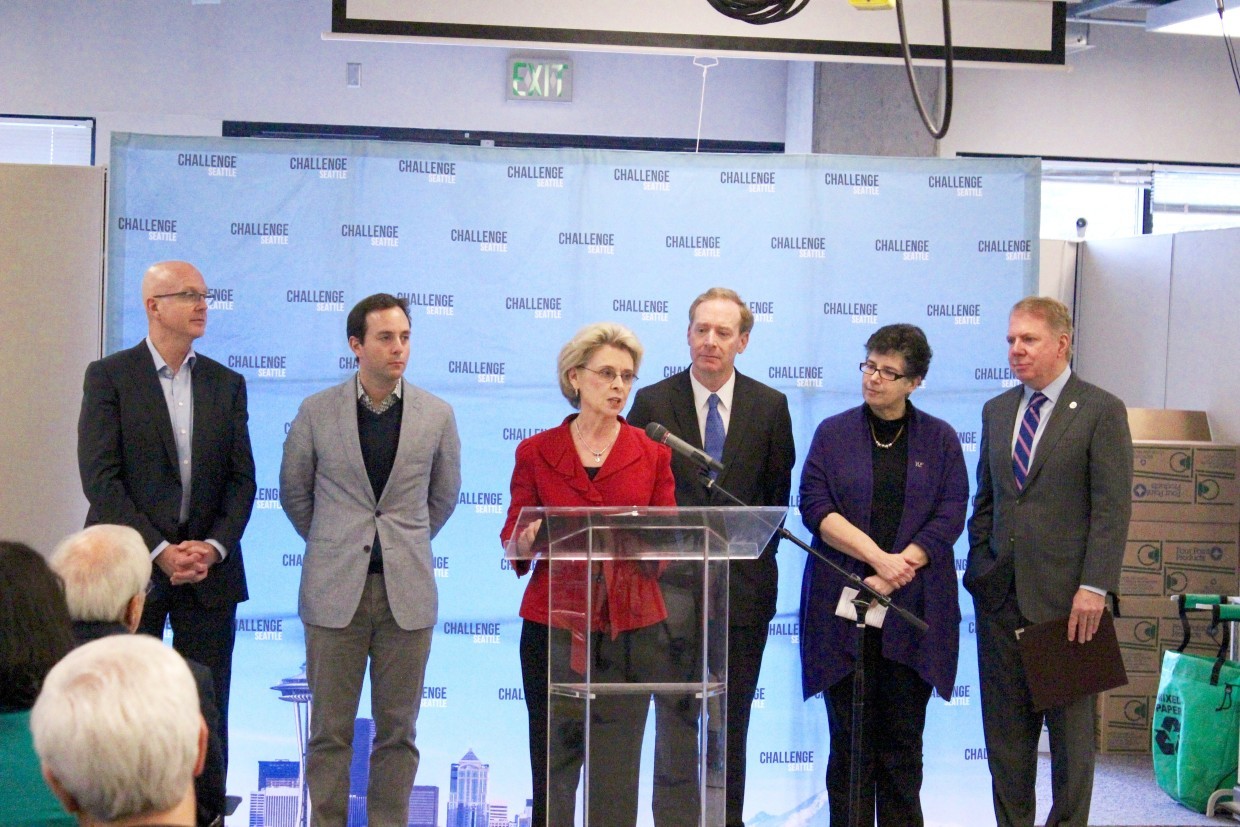
Photo courtesy: GeekWire (2016)
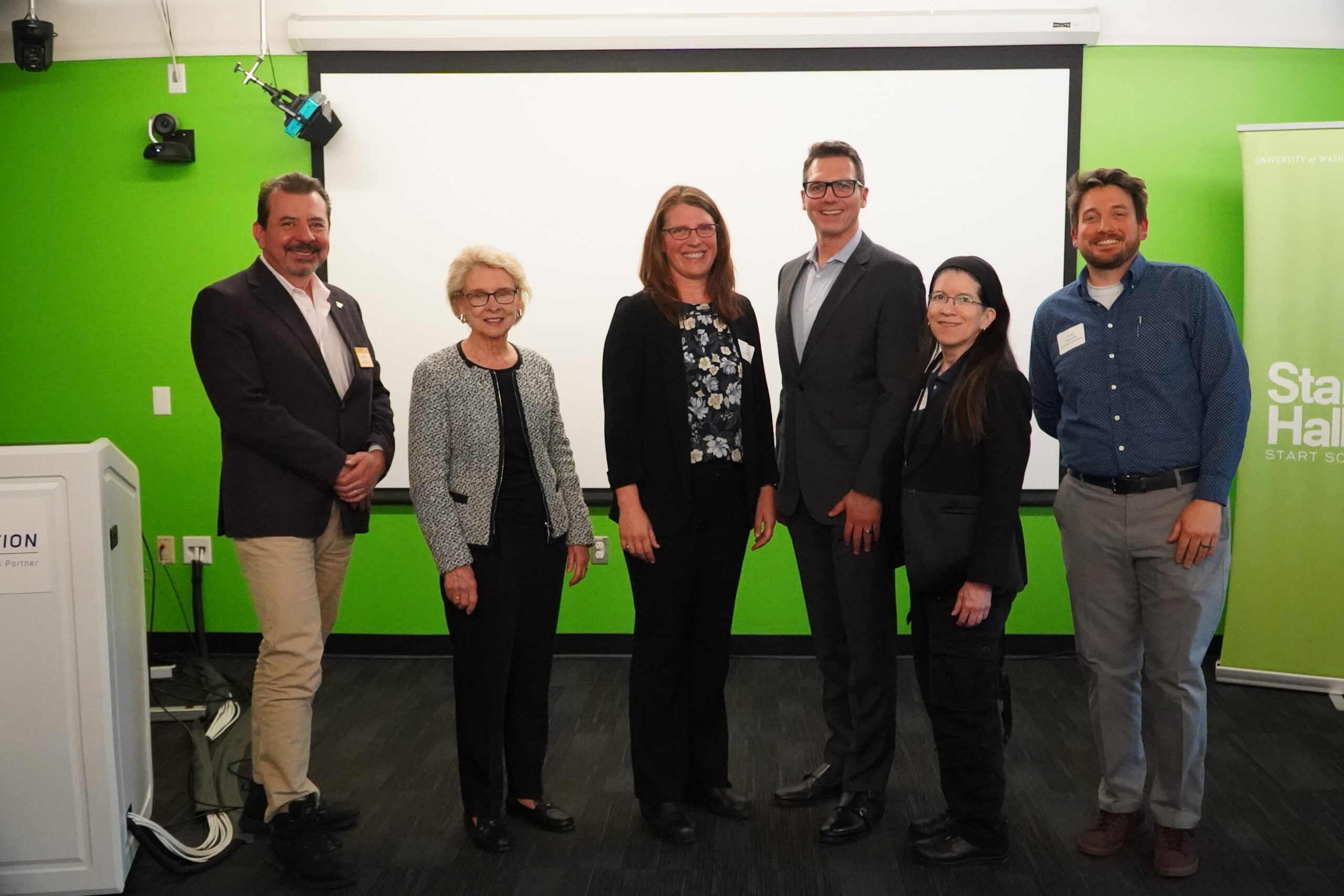
François Baneyx UW, Chris Gregoire, Carrie Sturts Dossick, Bart Treece, Cecilia Aragon, Travis Thonstad (2026)
I’ve had the privilege of serving as MIC’s Executive Director for the past four-plus years, and I can tell you: what we’ve built here is something genuinely different. Not different for the sake of it, but different because the problems we’re trying to solve demand it.
How it started, at least for me
My path to the MIC began in 2018, when I was working at WSDOT. A colleague of mine handed me a copy of Beyond Incident Response and said, “Read this. I’m getting you involved.” I probably should have asked what “getting involved” meant. I didn’t, but I trusted who was bringing me a long for this ride, and I just went for it.
What followed was a crash course in cross-sector collaboration, my name on a CoMotion press release, meetings with Seattle Police, Fire, Seattle Department of Transportation, Washington State Patrol, King County Metro, and Sound Transit. These were pre-COVID meetings, so you actually had to show up. They kept asking us how we did things, and I kept thinking: this isn’t how we do things at the D-O-T.
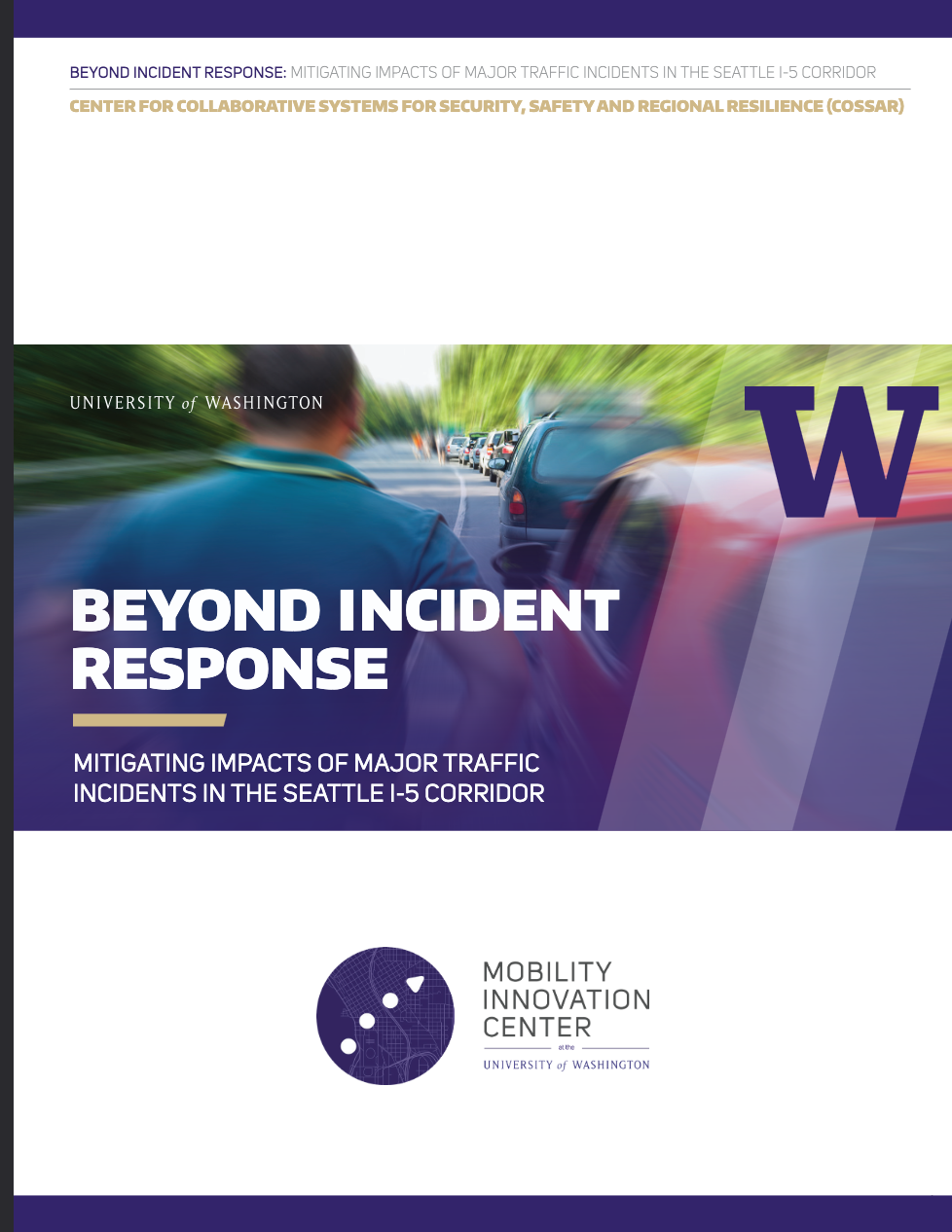
Beyond Incident Response
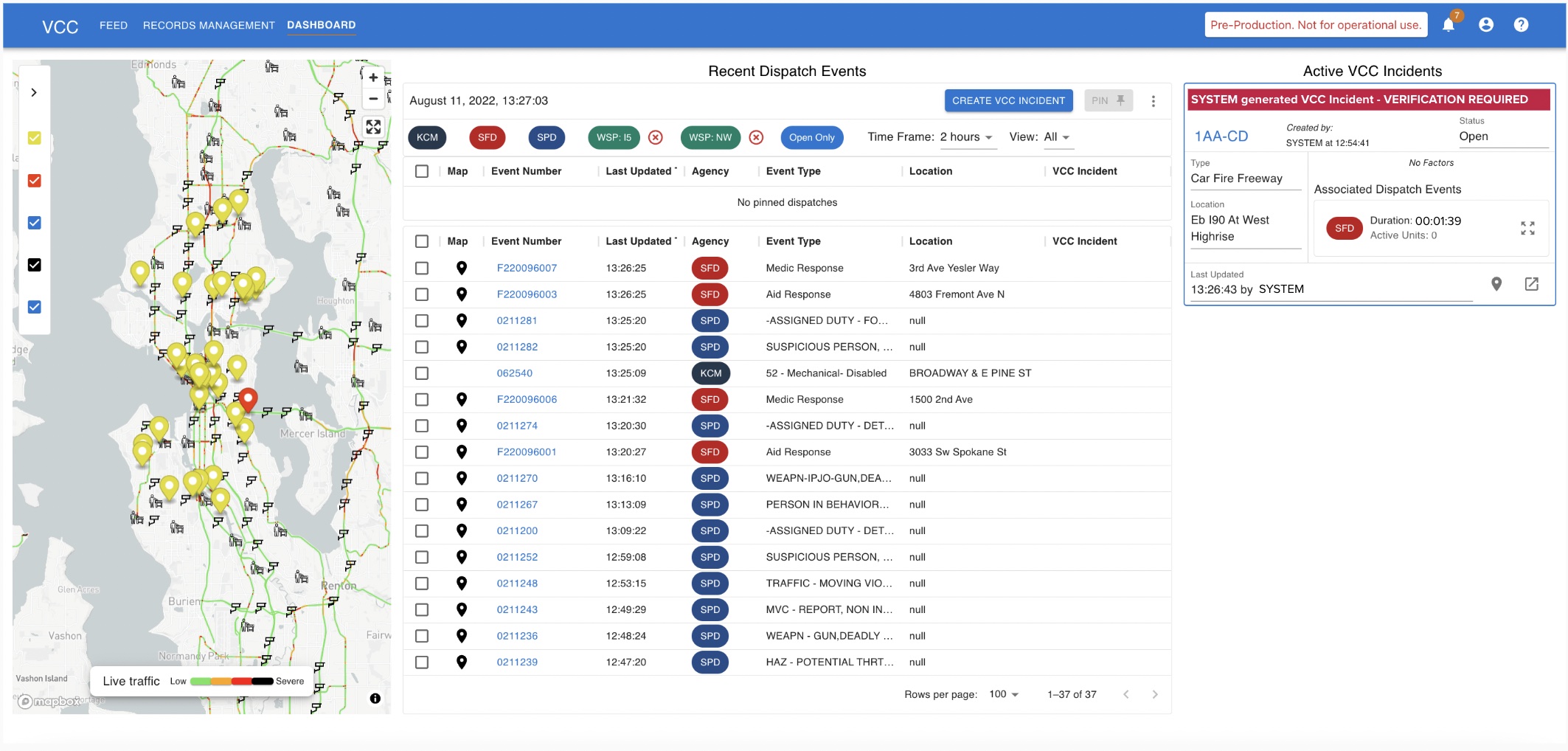
VCC Dashboard View
That tension between the way things are done and the way they could be done turned out to be exactly the right place to work. In 2022, the Virtual Coordination Center project was in the MIC’s portfolio, along with a high-stakes problem: we needed to reaffirm private sector partner commitments that were counted as the condition of the US Department of Transportation grant award. Problem was that people shifted during the pandemic and we needed to reconnect to ensure we achieved the goals of this public-private partnership endeavor. It took some doing, but we established those important connections and delivered a working platform that coordinates real-time emergency response and congestion management across King County. It’s now funded by the Washington State Legislature. That’s what cross-sector collaboration looks like when it works.
What makes the MIC different
There are other existing transportation research centers at the University of Washington, and they are doing great stuff! What makes the Mobility Innovation Center different is that our model fuses partner-driven problems from the public and private sectors with applied research and innovative approaches. Not only do the results accelerate findings from the lab into implementation, there’s a civic engagement component that demonstrates the value of academia to the public and elected leaders. We really do work better together.
A decade of impact
In ten years, the MIC has done an extraordinary amount of work. A few highlights:
The Seattle Commute Study: We redesigned this landmark study to address the realities of a post-COVID “new normal,” bringing together the best academic talent alongside partners including Commute Seattle and the City of Seattle. It worked so well, we did it twice, and it keeps getting better!
The I-90 Digital Twin: We deployed the first-of-its-kind digital twin for asset management, operations, and maintenance on the I-90 Homer Hadley floating bridge, which now carries Sound Transit’s 2-Line. This project demonstrates that digital tools can manage complex, critical infrastructure, and we’re doing it with support from WSDOT, the Federal Highway Administration, T-Mobile, Microsoft, Bentley Systems, Semtech Wireless, and Compass IoT. Sound Transit comes on board this summer.
Transportation 2050: I’m excited to share that May we will publicly release Transportation 2050, led by Professor Cecilia Aragon and supported by WSDOT, King County, Microsoft, Alaska Airlines, Boeing, and Challenge Seattle. This online platform will help the public and elected leaders better understand Washington State’s transportation needs for the next 25 years, using a human-centered design approach to make sense of large, siloed data sets. Get a sneak peek now at mobilitywa2050.org.
The people behind it all
None of this happens without people who are willing to take a risk on something different.
I’m grateful to Chris Gregoire, Marty Loesch, Mamie Marcuss, and Stephanie Formas at Challenge Seattle; to former University of Washington President Ana Mari Cauce for her vision; and to Gaia Borgias, who stepped up as founding director and got us rolling. We’ve worked with numerous faculty at the university, and several staff members who’ve supported us along the way to make this all possible.
When people ask how large our team is, I always struggle with the number, because the honest answer is each partner, regardless of academic department, public agency, or company, is part of what we do here. The MIC’s success belongs to everyone who showed up, stayed curious, and kept pushing.
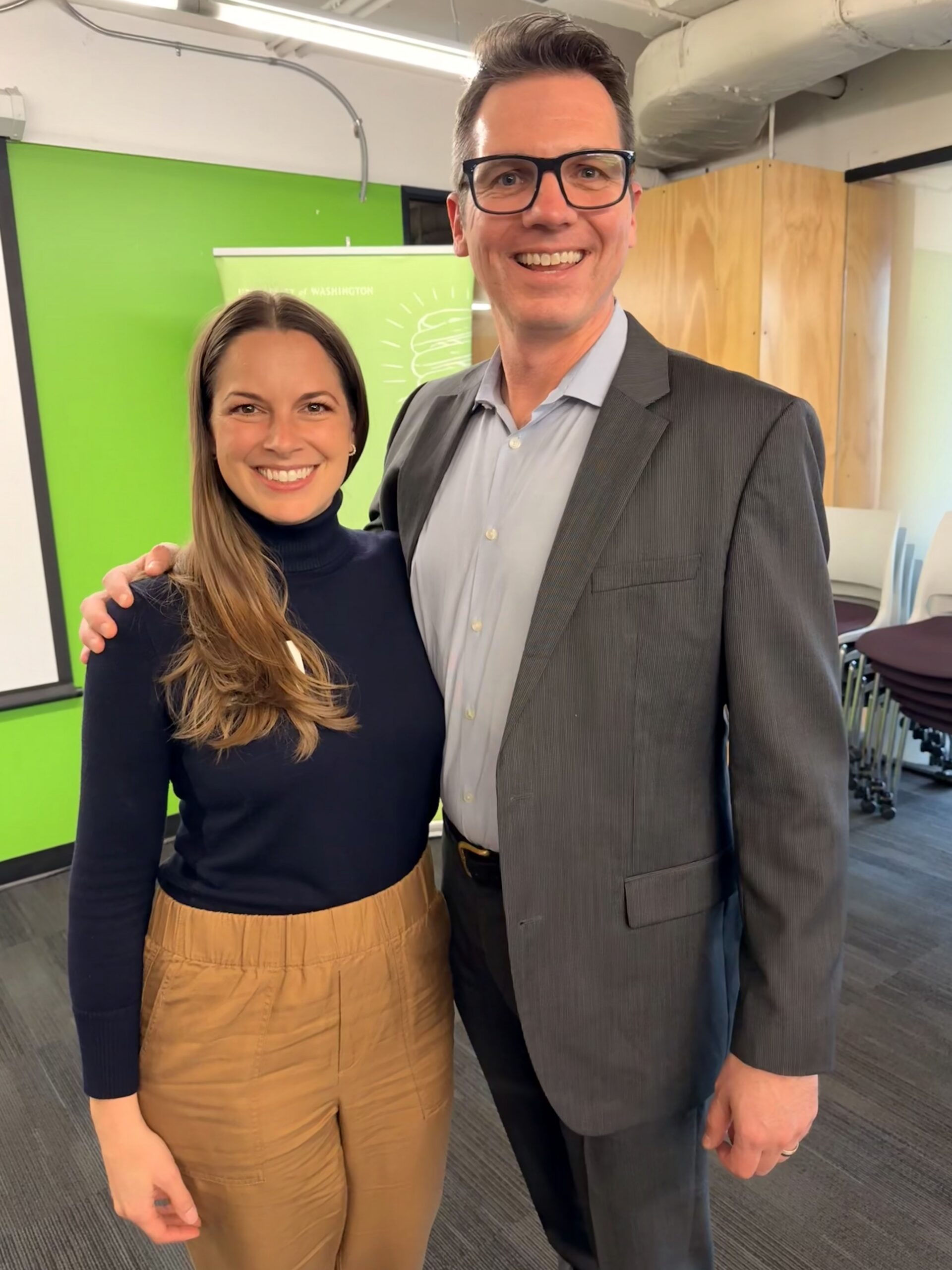
Founding MIC Director Gaia Borgias with current MIC Director Bart Treece
Looking ahead
Three themes have guided us, and they’ll carry us forward:
Courage and daring to be different. Innovation means trying new things. Sometimes it works, sometimes it doesn’t, but you’re always learning something that can be applied somewhere else. We live in a dynamic time. What works today may not work tomorrow. The real risk is not trying.
Building partnerships through trust. No one does this alone. We have incredible talent and resources in our backyard, and we accomplish more when we work together with the best of what we all have right here in the Cascadia region.
Civic engagement for research collaborations. Academia has so much to offer our communities. Civic engagement ensures the right people are at the table to implement innovation and to share results that prove good things happen when we work together.
We’ve done so much in our first 10 years and there’s more to do in the next 10 and beyond. We have our work cut out for us, and looking forward to more partnerships and innovation!